

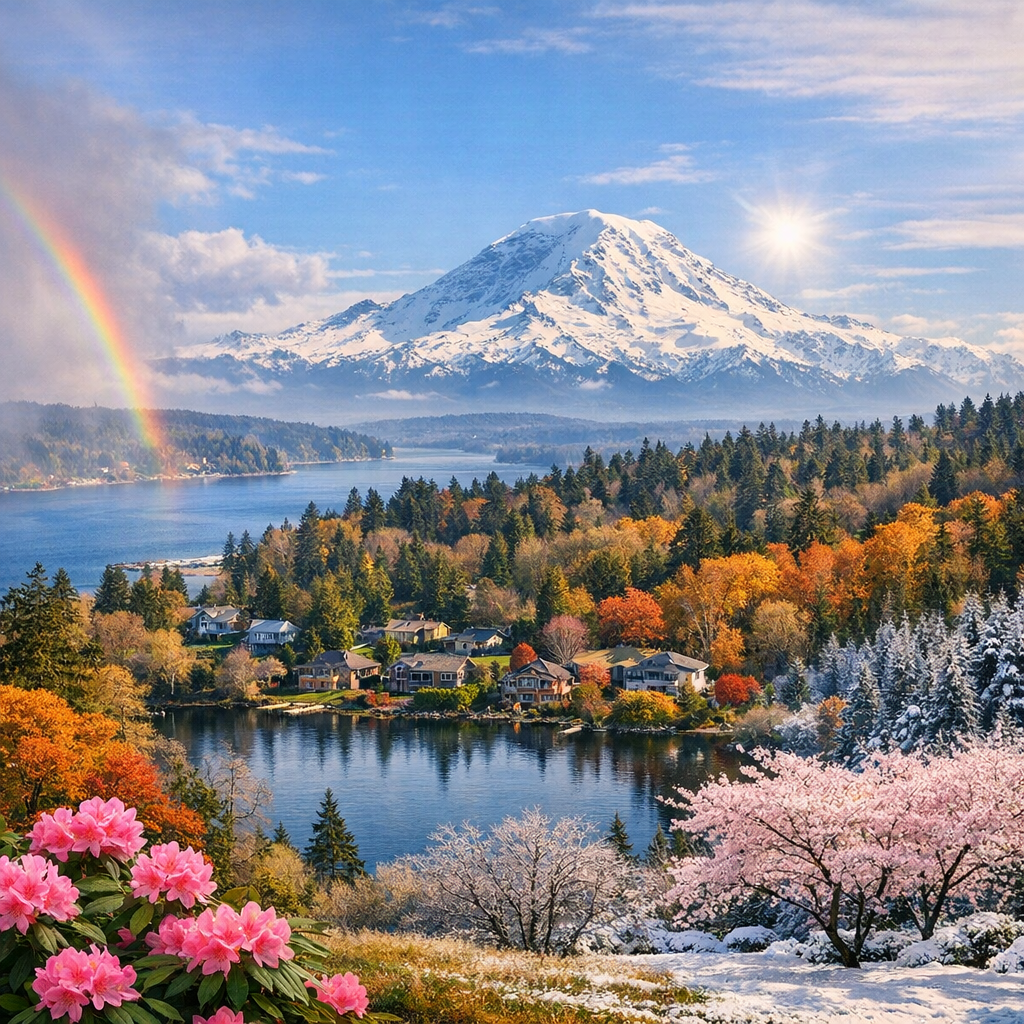
Federal Way, Washington, experiences a warm-summer Mediterranean climate, characterized by mild, wet winters and warm, dry summers. This climate classification, known as Csb in the Köppen system, shapes the city’s distinct seasonal patterns.
Seasonal Temperature Variations
Throughout the year, Federal Way’s temperatures exhibit moderate fluctuations. In winter, average high temperatures range from 44.4°F (6.9°C) in January to 48.9°F (9.4°C) in February, with lows dipping to around 34.2°F (1.2°C) in December. Summer brings warmer conditions, with average highs peaking at 77.5°F (25.3°C) in August and lows around 52.9°F (11.6°C). These moderate temperature variations contribute to the region’s comfortable climate year-round.
Precipitation Patterns
Federal Way receives approximately 41 inches of rainfall annually, with the wettest months occurring in late fall and winter. December typically sees the highest rainfall, averaging 4.72 inches (120mm). In contrast, the summer months are considerably drier, with July averaging just 0.43 inches (11mm) of precipitation. This seasonal distribution of rainfall influences local water management and environmental planning efforts.
Environmental Considerations
The city’s Surface Water Management (SWM) unit plays a crucial role in mitigating flooding and maintaining water quality. Rain and runoff from roads, roofs, and yards, known as surface water, can carry pollutants like vehicle fluids, lawn chemicals, and pet waste directly into local waterways and Puget Sound. To address these challenges, SWM promotes the preservation of natural drainage systems and the protection of fishery resources and wildlife habitats.
Additionally, Federal Way’s Water Quality team monitors the health of local lakes and streams by sampling macroinvertebrates—organisms without backbones visible to the naked eye. The presence and diversity of these species serve as indicators of water quality, helping to assess and improve the health of aquatic ecosystems.
Understanding Federal Way’s climate and environmental dynamics is essential for residents and policymakers alike. By recognizing seasonal patterns and implementing effective water management strategies, the community can work together to preserve the natural beauty and ecological health of the region.