

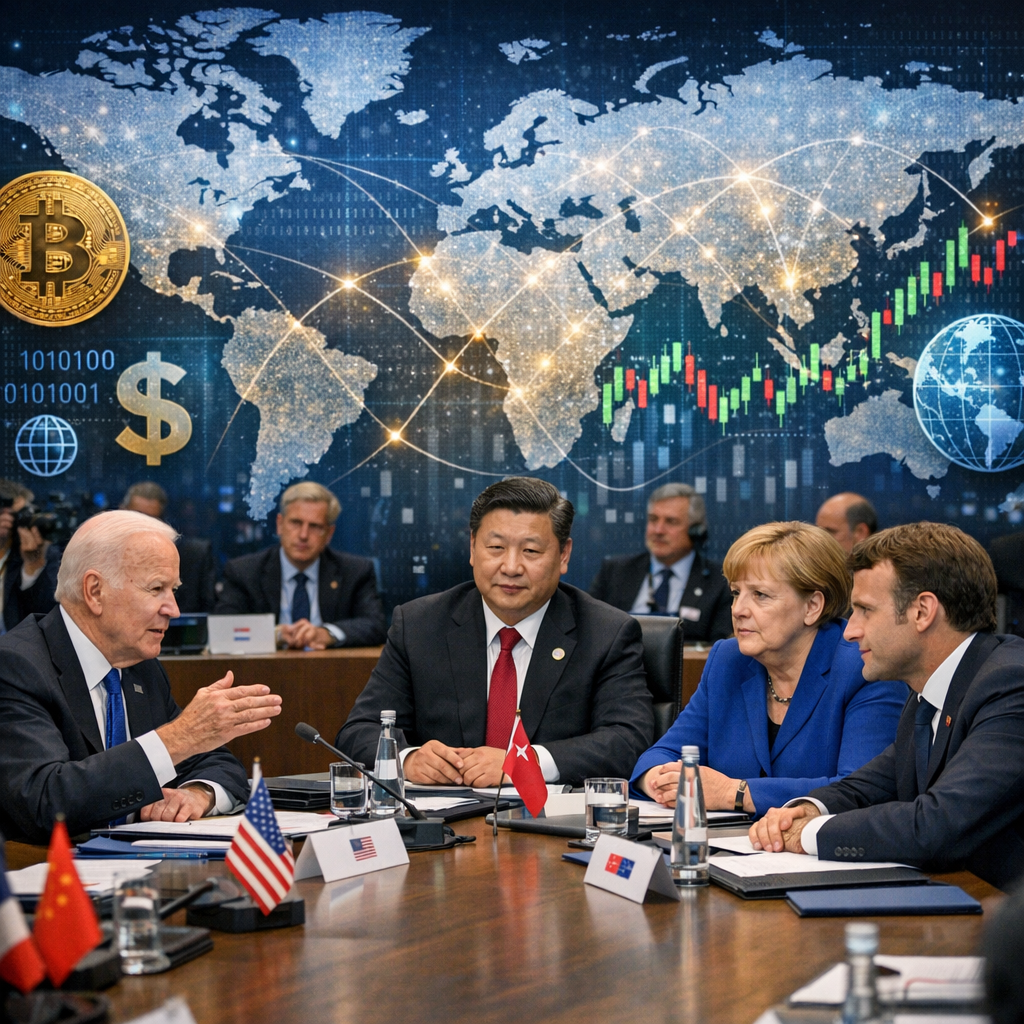
The global economy is currently navigating a complex landscape shaped by geopolitical conflicts and rapid technological advancements. Recent analyses indicate a projected global growth of 3.0% for 2026 and 3.4% for 2027, reflecting a delicate balance between these opposing forces.
Impact of Geopolitical Conflicts
Ongoing conflicts, particularly in the Middle East, have introduced volatility into global markets. These tensions have led to fluctuations in energy prices, affecting economies worldwide. For instance, the Organization for Economic Cooperation and Development (OECD) has highlighted that the intensifying conflict in the Middle East has offset potential growth, maintaining the global growth projection at 2.9% for 2026.
Technological Advancements and Economic Resilience
Conversely, the rapid adoption of artificial intelligence (AI) and related technologies is bolstering economic resilience. Investments in AI infrastructure are driving growth, especially in sectors like data centers and cloud services. Gartner’s revised global IT spending forecast for 2026 anticipates a 14.2% annual increase to $6.37 trillion, primarily fueled by AI-related investments.
Regional Economic Outlooks
Different regions are experiencing varied economic trajectories. The United States is witnessing robust consumer spending and significant investments in AI, contributing to steady growth. In contrast, Europe faces slower growth due to energy price increases and other challenges. Asia presents a mixed picture: India is projected to lead with a 6.4% growth rate, while China’s growth is expected to slow to 4.5%, influenced by issues in the property sector.
Conclusion
As the global economy contends with the dual forces of geopolitical instability and technological progress, the outlook remains cautiously optimistic. The resilience demonstrated by various economies underscores the importance of strategic investments and adaptive policies in navigating these uncertain times.