

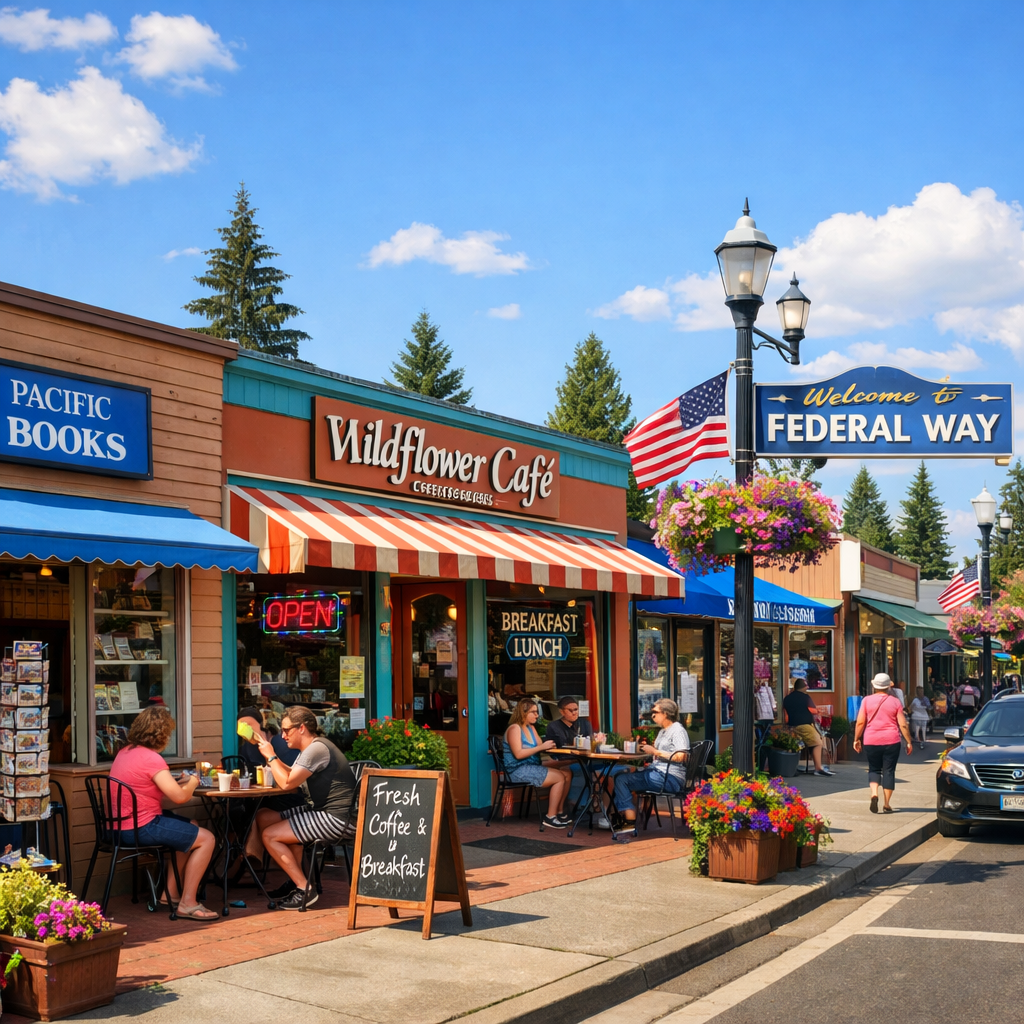
Where Federal Way Stands
Federal Way now has around 100,000 residents, up about 18% from mid-2000s estimates, with median household incomes rising significantly. Meanwhile, housing costs—both home values and rents—have nearly doubled over the same period, growing faster than many incomes. Telework has increased, college attainment ticked upward, and unemployment has dropped—signals of gradual economic stabilization, but also signs of strain, especially for residents working locally. (Sources: GeoStat, City of Federal Way employment studies)
Growing Sectors & Jobs
The city’s biggest employers remain in health care and social assistance; retail; accommodation and food services; and educational services, with median annual wages in those sectors ranging between ~$32,000 and ~$51,000. Notably, logistics, clean tech, construction, maritime, aerospace, and software/IT are receiving increasing attention as growth targets in regional economic strategy research. (Sources: Federal Way employment profiles, CREEC study)
Yet the job market is showing signs of softness: many job postings remain open for long periods, especially in retail, restaurant work, and mid-level management. The hiring pace is slower than some peer cities, which may reflect a mismatch between employer expectations and the local workforce supply. (Sources: Job Market Signals, Chamber CEO interview)
Challenges & Pressures
One of the biggest economic leaks in Federal Way is workers commuting out of town: thousands live here but work elsewhere, while many of the jobs inside the city are filled by commuters. That imbalance means potential earnings end up being spent elsewhere, limiting local business growth and tax base expansion. (Source: Chamber CEO insights)
Affordability remains a concern. With rapid increases in rent and home values, many households spend a rising share of income on housing. For workers in lower-wage jobs—especially in retail or food service—remaining in the city or moving closer to employment hubs is increasingly difficult. (Sources: Trends and Changes data, Housing Action Plan)
Opportunities & Strategies for Local Businesses
Focus on skill alignment
Businesses can benefit by collaborating with local schools, community colleges, and training providers to help develop skills needed in growing sectors—such as healthcare, logistics, and tech. With more residents earning credentials, local businesses have more opportunity to hire locally and reduce turnover.
Retain and attract local spending
Supporting small, locally owned businesses helps keep both dollars and jobs in Federal Way. Entrepreneurs should aim to offer distinctive goods and services—local food, cultural goods, specialty retail—to capture spending from residents who currently shop elsewhere.
Leverage redevelopment efforts
Projects like Downtown Federal Way’s redevelopment and initiatives to bring specialty retail, arts, educational-classroom space, childcare facilities, and possibly a university branch campus to the city center could catalyze new business opportunities. Property owners, retailers, and service providers can align offerings with these planned uses. (Source: Downtown Redevelopment Plan)
What the City and Stakeholders Can Do
The city can help by streamlining permitting, offering incentives for mixed-use developments that combine jobs, housing, and public amenities, and investing in infrastructure—transport, broadband, transit access—that supports commuting, remote work, and business operations.
Staying transparent with economic data (dashboards, labor-market trends, industry forecasts) empowers businesses and community members to make informed decisions. Partnerships across public and private sectors can close gaps between workforce supply, employer demand, and local resident opportunities.
Federal Way has strong foundations—diverse population, improving educational attainment, and strategic location in the Puget Sound region. With deliberate action, the city’s business community can capture more benefits of growth for local residents and entrepreneurs alike.